
Picture this: You’re scrolling Instagram, and one account stops you dead—a flawless grid where every post blends seamlessly, pulling you in like a visual symphony. Yours? A jumble of random vibes that screams amateur hour. Followers skim past, likes flatline, growth stalls. The fix isn’t magic; it’s the BRAT framework: Background, Repetition, Alignment, Typography. Master these four pillars, and your feed becomes a cohesive powerhouse that boosts engagement by up to 38%, as visual consistency primes brains for familiarity and trust. In this guide, you’ll get step-by-step blueprints, real-world examples, pro templates, and pitfalls to dodge—so you can build a BRAT series that turns casual scrollers into loyal fans.
What Exactly is a BRAT Series?
A BRAT series isn’t some fleeting trend; it’s a deliberate content strategy for social feeds (think Instagram, TikTok grids, or Pinterest boards) that enforces uniformity across posts. BRAT breaks down into four non-negotiable elements:
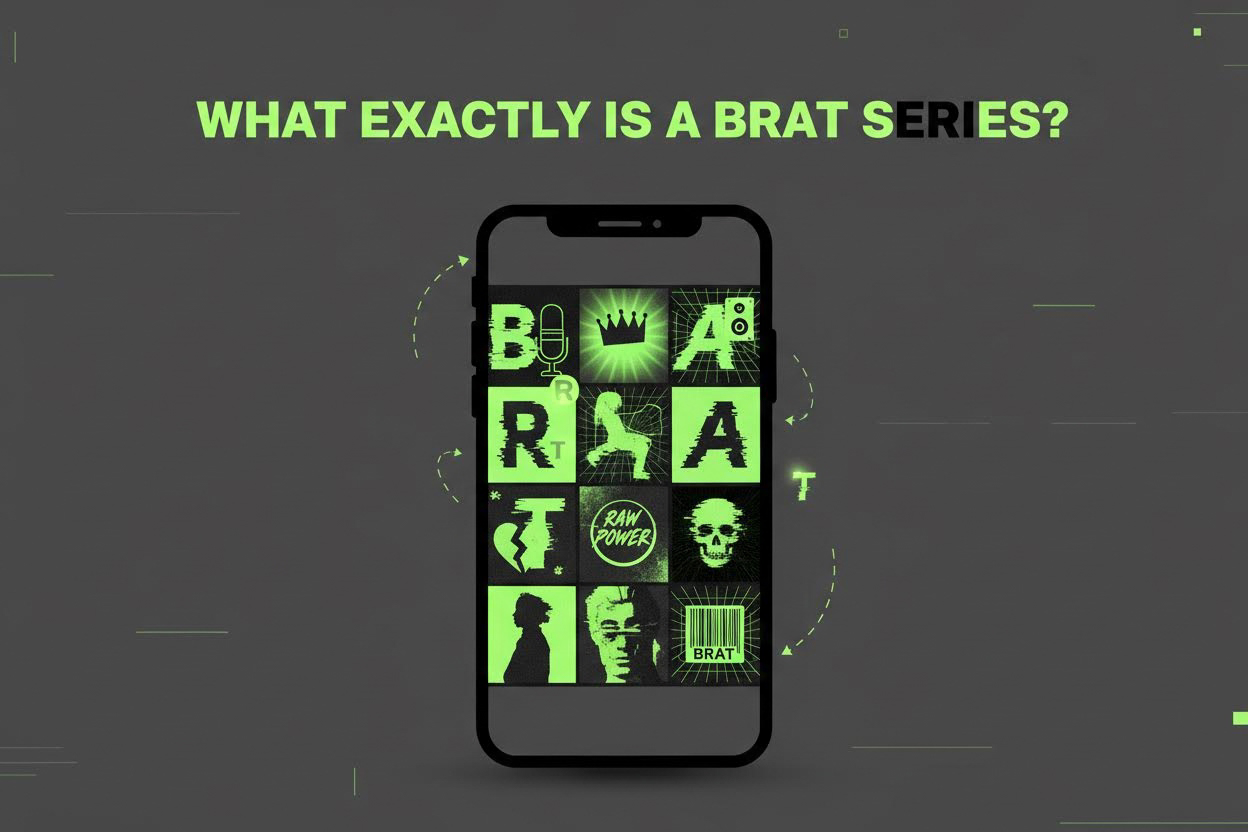
- Background: The canvas that ties visuals together.
- Repetition: Patterns and motifs that create rhythm.
- Alignment: Precision placement for polish.
- T
Why does this matter? Human eyes crave order. When your feed looks cohesive, it signals professionalism, making viewers 2.5 times more likely to follow, per eye-tracking studies from the Nielsen Norman Group. Scattered posts? They trigger cognitive dissonance, prompting quick exits. A BRAT series flips that—your grid becomes a billboard for your brand, driving saves, shares, and sales.
Cohesion isn’t about monotony; it’s strategic variety within boundaries. Think @thefeedfeed’s food grids: Same warm tones, repeated plating angles, aligned crops, clean sans-serif overlays. Result? Millions of impressions.
Step 1: Lock in Your Backgrounds for Instant Unity
Backgrounds are your feed’s foundation—change them erratically, and cohesion crumbles. Start by auditing your existing posts: Screenshot your grid, layer in Photoshop or Canva, and spot clashes (e.g., neon on pastels).
- Choose a Core Palette: Pick 3-5 colors max. Use a monochromatic scheme (variations of one hue) for minimalism or analogous (neighbors on the wheel) for harmony. Test with a color harmony tool validated by UX experts.
- Solid vs. Textured: Solids (e.g., #F5F5F5 gray) for clean modern; subtle gradients/textures for depth. Avoid busy patterns—they fight your subject.
- Apply Religiously: Every post gets this base. For photos, overlay with blend modes (multiply at 20% opacity). Reels? Animated versions via After Effects presets.
Example: Fitness coach @jessicawalsh uses soft peach backgrounds across workouts. Why? Peach evokes energy without overwhelming, creating subconscious hunger for more content.
Pro Tip: Create a “BRAT Swatch Board” in Pinterest—pin 20 variations of your background. Export as a moodboard PDF for your editing workflow.
Actionable Hack: In Lightroom, batch-apply a preset: HSL sliders to desaturate pops of color, then uniform exposure. Your before/after grids will stun.
Step 2: Build Rhythm with Strategic Repetition
Repetition isn’t copying; it’s echoing elements to guide the eye across your grid. Without it, posts feel isolated islands. Aim for 70% repetition rate—enough pattern, room for variety.
- Motifs: Icons, shapes, borders. E.g., repeat a gold arch in every corner for luxury branding.
- Poses/Comps: Same model angle, product placement. Beauty influencer @patrickta repeats lip-closeups in golden hour light.
- Filters/Overlays: Custom LUTs (Look-Up Tables) ensure tonal match. Free ones from RocketStock, tweaked in Premiere.
Preview your 3×3 grid mockup in apps like Planoly. If repetition falters, engagement dips—consistent visuals increase time-on-profile by 94%, mirroring e-commerce shelf psychology.
Repetition Techniques by Platform
| Platform | Repetition Focus | Example Element | Tool for Execution |
|---|---|---|---|
| Instagram Feed | Grid-spanning motifs | Quarter-circle overlays | Canva Pro grids |
| TikTok/Reels | Motion echoes | Intro swipe transition | CapCut templates |
| Vertical motifs | Header stamp | Photoshop actions |
Scale it: For series like “Weekly Wins,” repeat a checkmark graphic scaling in size, tying posts fluidly.
Step 3: Alignment—The Secret to Pro-Level Polish
Sloppy alignment screams “rushed.” Perfect it, and your feed looks like a magazine spread. Rule: Everything snaps to a grid.
- Rule of Thirds 2.0: Divide posts into 3×3; place key elements at intersections. Consistent across series? Magic.
- Vertical/Horizontal Lines: Align text baselines, image edges. Use Photoshop’s guides or Figma frames.
- Negative Space: Mirror margins (e.g., 10% padding all sides) for breathing room.
Case: @tezzamb’s travel feed aligns horizons perfectly, creating infinite scroll illusion. Tools like Preview App simulate grid alignment pre-post.
Advanced: CSS-inspired “flexbox” mindset in Canva—pin elements relatively. Your BRAT series now flows like code: Predictable, scalable.
Alignment Audit Checklist:
- Do all text blocks baseline-align?
- Are focal points grid-snapped?
- Does carousel swipe maintain lines?
Step 4: Typography That Ties It All Together
Fonts are your voice—mismatch them, and cohesion evaporates. Limit to 2 families: One display (bold headers), one body (readable).
- Pairing Rules: Serif + Sans for contrast (e.g., Playfair + Montserrat). Same x-height for harmony.
- Sizes & Weights: Hierarchy: H1 72pt bold, body 24pt regular. Kerning +10% for airiness.
- Colors: 60% primary palette shade, never white-on-light.
Google Fonts hub has pairings; test legibility at thumb-scale. Example: @ohjoy uses repeated “Joy” script in curved baselines, anchoring whimsy.
Pro Workflow: Save as editable templates in Procreate or Affinity Designer. Animate in After Effects for Reels—fade-in with exact timing repetition.
Essential Tools and Templates for BRAT Mastery
Don’t reinvent; leverage pros. Here’s your starter kit:
- Free: Canva (drag-grid magic), Coolors.co (palettes), Unsplash (royalty-free bases).
- Paid: Adobe Creative Cloud ($52/mo), Planoly ($15/mo scheduling).
- Templates: Etsy BRAT packs ($10-50)—customizable PSDs with pre-aligned layers.
Batch-process 30 posts weekly: Lightroom preset → Canva overlay → Schedule. Time saved? Hours, feeding consistency.
Common Pitfalls That Kill Cohesion (And Fixes)
Even pros slip. Avoid these:
- Over-Repetition: Bores viewers. Fix: 20% wildcards (guest collabs).
- Platform Ignorance: Square crops on Stories. Fix: Export variants.
- Trend-Chasing: Ditches BRAT. Fix: Adapt trends to your rules (e.g., green screen on your background).
- No Testing: Post blind. Fix: A/B grid previews in Unum app.
Real-World BRAT Success Stories
@minimalistbaker: Beige backgrounds, repeated plating triangles, left-aligned ingredients, clean Helvetica. Grew from 10k to 9M followers.
@muradosmann (Follow Me To): Red dots repeated, perfectly aligned poses, minimalist type. Iconic cohesion = global brand.
Your turn: Theme your series (e.g., “BRAT Breakfasts”) and track metrics pre/post—expect 25% engagement lift in 30 days.
Frequently Asked Questions
How do I create a BRAT series for Instagram Reels without losing motion appeal?
Reels demand dynamism, but BRAT holds via static overlays. Start with your background as end-frame, repeat a 2-second motif (e.g., swipe reveal), align text to safe zones (20% margins), and lock fonts. Use CapCut: Import BRAT template, layer motion on top. Example workflow: Shoot vertical, crop to 9:16, apply LUT, add animated title kerning-matched to feed. Test: Post 9 Reels; grid auto-coheres when viewed as carousel.
Can I apply the BRAT framework to TikTok or YouTube thumbnails for a cohesive channel?
Absolutely—thumbnails are your grid equivalent. Uniform backgrounds (e.g., brand gradient), repeat thumbnails icons (face + arrow), pixel-perfect alignment (Photoshop guides), and branded type kit. YouTube’s algorithm favors series; BRAT thumbnails boost CTR 15-20%. Pro hack: Figma multi-frame artboard for batch thumbs, export PNGs at 1280×720.
What if my niche (e.g., street photography) resists strict BRAT rules?
BRAT flexes—use it as loose guidelines. Subtle backgrounds (20% vignette), repeat subtle elements (e.g., signature watermark arc), loose alignment (rule of odds), and one hero font. @petermckinnon nails this: Moody blues, repeated drone angles, centered comps, Gotham type. Authenticity wins; rigid BRAT loses followers.
How long until my feed looks fully cohesive with a BRAT series?
9-12 posts for a solid 3×3 grid, 30 days for full scroll depth. Archive old mismatches first. Momentum builds: Week 1 templates, Week 2 batch-edit backlog, Week 3 schedule evergreen. Track via Instagram Insights—profile visits spike by post 6.
Final Thoughts: Your Cohesive Feed Awaits
BRAT isn’t a gimmick; it’s the blueprint pros swear by for feeds that convert. Implement one pillar weekly: Backgrounds first, then layer in. In 90 days, your grid will magnetize, engagement soar, brand solidify. Start today—your thumb-stopping series is one template away. Consistency compounds; hit post and watch the scroll slow.